 Image 1 of 1
What You’ll Learn Inside
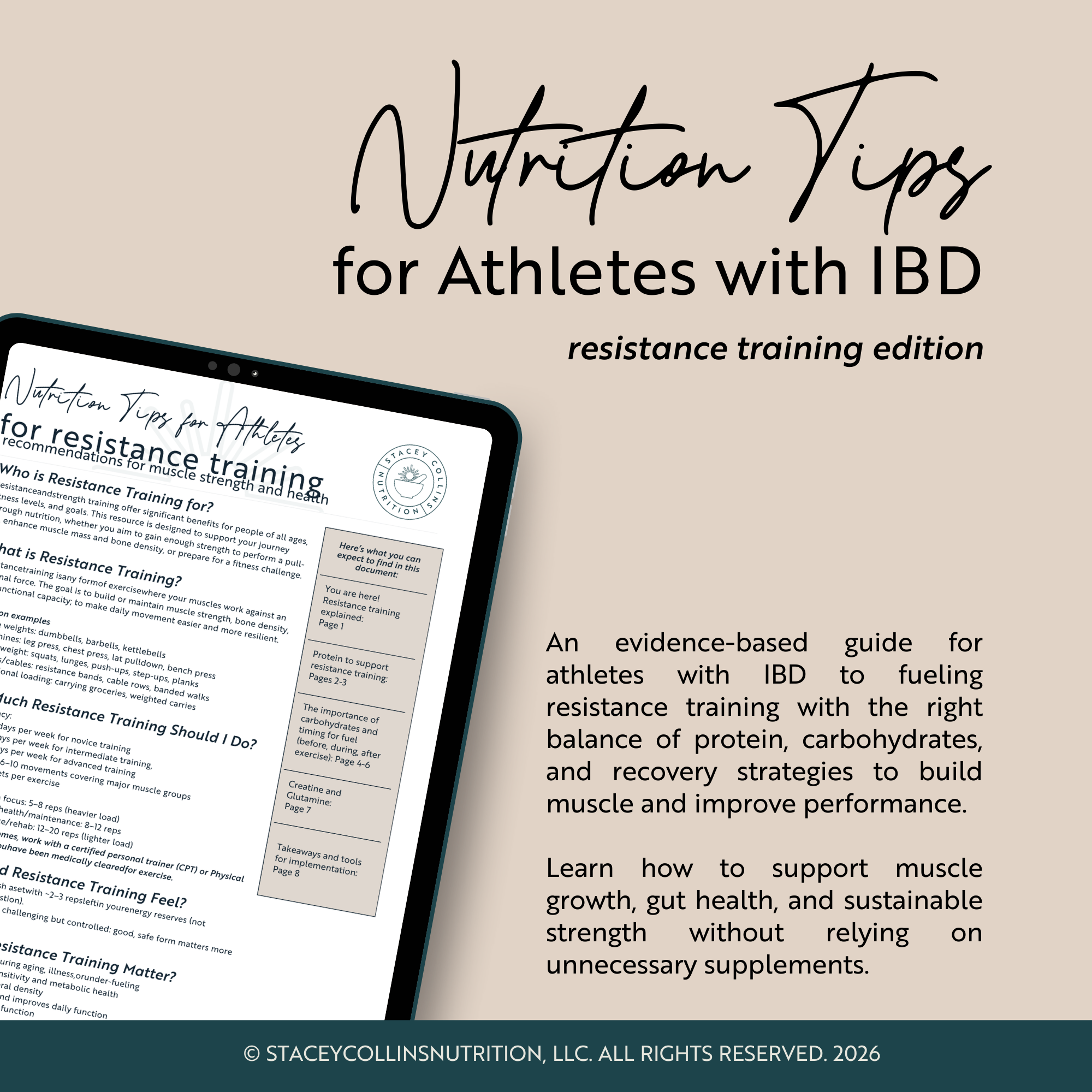
This 8-page digital guide covers:
What Resistance Training Actually Does in the Body
How muscle protein synthesis works
Why mTOR signaling matters
The real role of leucine
Why lifting alone doesn’t build muscle — fueling does
Protein for Resistance Training
Ideal protein ranges (1.4–2.0 g/kg/day for most active individuals)
How to distribute protein evenly throughout the day
Fast vs slow-digesting protein
Dairy, plant-based, egg, meat, and seafood protein comparisons
How to prevent GI distress from high-protein diets
Carbohydrates for Strength & Performance
Why carbs are the primary fuel for resistance training
Pre-, during-, and post-workout carb timing
How much to eat based on intensity
GI-friendly carb options
Low-fiber pre-workout snack strategies
Recovery & Supplement Breakdown
Post-workout fueling formula
Practical meal examples
Creatine vs glutamine comparison
Who benefits from each supplement (and who doesn’t)
Who This Guide Is For
Beginners starting a strength routine
Intermediate or advanced lifters
Athletes balancing resistance and endurance training
Individuals with IBD who want evidence-based fueling strategies
Anyone who feels fatigued, bloated, or under-fueled while lifting
Key Takeaway
You do not build muscle by lifting alone. You build muscle by lifting and feeding your body enough.
This guide gives you a clear, structured plan so you can train hard without sacrificing energy, gut health, or recovery.
Frequently Asked Questions
-
No. Resistance training combined with adequate protein and carbohydrates is the primary driver of muscle growth. Supplements like creatine or glutamine may support specific goals but are optional.
-
Most active individuals benefit from approximately 1.4–2.0 grams of protein per kilogram of body weight per day, distributed evenly across meals.
-
Yes. Carbohydrates refill muscle glycogen, improve training performance, and support recovery. Skipping carbs while lifting can increase fatigue and impair results.
-
Yes. This guide includes GI-conscious protein and carbohydrate recommendations and emphasizes balanced fueling to support gut-muscle health.
-
1–3 hours before: Carbs + some protein
During long/high-volume sessions: Quick carbs
Within ~2 hours after: Protein + carbs + fluids