
There's nothing about having inflammatory bowel disease that prevents you from being a serious athlete. But there is something that will derail your training faster than any flare: pretending the rules that work for everyone else should work exactly the same way for you.
Resistance vs. Endurance Training for Athletes with IBD: An Evidence-Based Guide
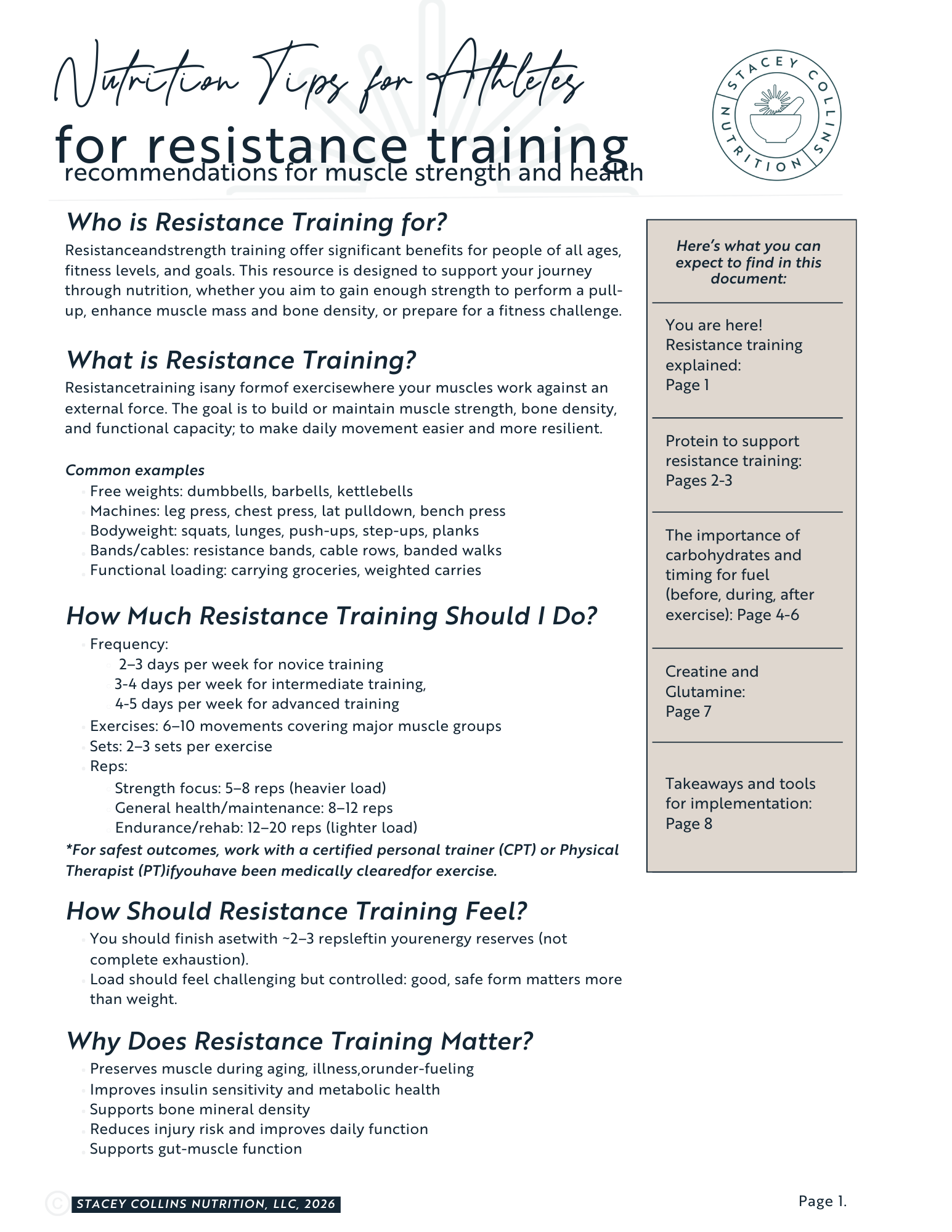

Table of Contents
If you’re an athlete (or generally active individual) living with inflammatory bowel disease (IBD), exercise might feel complicated at times given the complexity of IBD symptoms, ranging from fatigue to urgency; pain and certain nutrient deficiencies.
You know movement is good for you, and there’s science to prove it. Research shows that appropriately dosed exercise can support inflammation regulation, help protect bone density (especially if you’ve ever been prescribed steroids), improve mood, and build physical and mental resilience. Regular training is also linked to a better quality of life in people with IBD. In other words, exercise isn’t just about performance, but about staying well.
Of course, knowing exercise is important doesn’t mean training feels easy.
Your consistency in a routine can disappear overnight when a flare hits. Hospitalizations or steroid courses can undo months of hard-earned strength-training. You might hesitate before a workout or race, wondering how your gut will respond, or whether you’ll need a bathroom halfway through.
Fueling can feel stressful. Travel adds another layer of anxiety. And it’s hard not to feel behind when you’re comparing yourself to teammates or competitors whose bodies might not come with the same unpredictability.
Pause, take a deep breath, and know that all of these experiences are valid. It just means you’re training with a chronic condition, and that changes the game.
If you’re living with IBD, the type of training you prioritize matters. Resistance and endurance training place very different demands on your body, gut, energy reserves, and recovery capacity. Understanding how each affects inflammation, muscle mass, bone health, and symptom tolerance can help you make training choices that actually work for you, not against you.
This isn’t about pushing through at all costs or copying what athletes without IBD are doing. It’s about using evidence-based strategies to train in a way that supports performance, protects your health, and respects the realities of living with IBD.
This Article Is for You If:
- You have Crohn’s disease or ulcerative colitis and identify as an athlete, active individual, or someone who trains with intention.
- You want evidence-based guidance instead of wellness trends or fear-based advice.
- You’re trying to balance performance goals with symptom management and remission.
- You’ve struggled with consistency, confidence, or setbacks related to flares, fatigue, or GI symptoms.
Resistance Training: A Foundation for Athletes with IBD
If you’re living with IBD, resistance training often plays a bigger role in your long-term health than you might realize, especially when training consistency isn’t guaranteed.
Strength training supports several systems commonly affected by IBD.
Muscle loss can happen quickly during flares, hospitalizations, or periods of low intake. Corticosteroid use increases the risk of reduced bone mineral density over time.
Strength training directly addresses both by preserving lean mass and giving your bones the loading they need to stay strong.
Resistance training also tends to place less immediate stress on the gastrointestinal system than long-duration endurance work, since sessions are shorter, rest periods are built in, and total energy demands are lower.
For many active individuals with IBD, this makes strength work more tolerable during symptom-sensitive periods or early return-to-training phases after a flare.
That doesn’t mean resistance training is easy, of course. You still need recovery. You still need to fuel. And you still need to progress carefully.
But strength training often gives you more control. You can adjust the load, the volume, or the session itself based on how you’re feeling that day.
Why Resistance Training Can Be Especially Valuable If You Live with IBD
Helps Preserve Muscle During Setbacks
Flares, hospital stays, and reduced intake of food can lead to rapid muscle loss. Resistance training is one of the most reliable ways to slow that down and rebuild once symptoms are under control.
Supports Bone Health
Weight-bearing and loaded movements signal your bones to maintain density. This is especially important if you’ve used steroids in the past or if most of your training has been endurance-focused.
Often Easier on GI Symptoms
Compared to long runs or extended cycling, strength sessions are less likely to trigger urgency, cramping, or gut-related fatigue. Not everyone has the same response, but many athletes with IBD report better tolerance.
Builds Confidence during Inconsistent Training
Strength training gives you something concrete to work on when endurance volume needs to drop. That sense of stability can matter, especially when you’re returning to training after time off.
Practical Considerations
Resistance training doesn’t need to be extreme to be effective. You don’t have to punish your way through a session to reap the benefits, and in fact, exercise may be more beneficial for you if it feels non-punishing and fun. Pushing too hard can slow recovery and increase fatigue, especially during or after a flare.
Most evidence-based approaches focus on:
Moderate weights with good technique
Lower to moderate total volume
Rest periods that allow adequate recovery
Flexibility to adjust based on symptoms, fatigue, or recent treatment
Progress won’t always be linear, and that’s expected. Maintaining strength through a rough stretch is still progress.
Resistance training won’t replace endurance work if your sport requires it. But for many athletes with IBD, it provides a steady base that supports both performance and health when endurance training becomes harder to sustain.
Endurance Training: Benefits and Tradeoffs for Athletes with IBD
Endurance training can absolutely have a place in your life with IBD, but it also comes with more tradeoffs than resistance training, especially when symptoms are active or your recovery bandwidth is limited.
Aerobic exercise supports cardiovascular fitness, metabolic health, and mental well-being. And if endurance sports are part of who you are, that matters.
For many people with IBD, moderate endurance training is associated with better mood, lower stress, and improved quality of life. At the same time, however, endurance training asks more of your GI system.
Longer sessions increase your energy and fluid needs and shift blood flow away from the gut during exercise. Depending on where you are with your disease activity, that can make symptoms more likely, especially urgency, cramping, nausea, or fatigue. Your personal response may be mild or significant, but the “gut cost” of endurance work tends to rise as duration and intensity rise, too.
That doesn’t mean endurance training is off the table; It just means you usually need more planning, more flexibility, and more honest check-ins with your body.
Why Endurance Training Can Feel Harder in IBD
You May Deal with More GI Symptoms During or After Training
Long runs, rides, or higher-volume sessions can trigger urgency, cramping, nausea, or gut fatigue. Some athletes tolerate endurance work well, while others notice symptoms quickly. Either way, if your body gives you feedback, it’s important to listen.
Fueling May Feel More Stressful
Endurance training increases your need for carbs and fluids to support performance and recovery. If your appetite is low, your gut feels unpredictable, or certain foods don’t sit well, meeting those needs can feel like a whole separate job.
Flares and Recovery Periods Can Limit What You Can Tolerate
During a flare, or when you’ve just entered remission, your body may not tolerate longer or harder sessions well as your body is prioritizing healing. Pushing too hard, too fast can ramp up fatigue and leave you feeling worse, not better
Logistics Can Spike Your Anxiety
Bathroom access, routes, travel time, race-day plans, and fueling timing add mental load. If you’ve ever worried about being far from a bathroom mid-run, you already know how real that stress is.
When Endurance Training Still Makes Sense
Endurance training can still work well for you when your symptoms are well-controlled, and you have enough recovery resources in place.
You’ll often tolerate endurance work better when:
You keep most sessions at a moderate intensity (instead of going hard every time)
You match session length to your current energy and symptom level
You practice fueling in low-stakes settings before race day
You build volume gradually instead of making big jumps
But when your body asks for less, listen to it. Scaling back duration, intensity, or frequency can help you stay connected to your sport without digging yourself into a deep emotional hole.
Endurance training doesn’t have to be all-or-nothing. Letting it ebb and flow with your health is often what makes it sustainable in the long term.
Resistance vs. Endurance Training in IBD
A practical comparison to help you decide what to prioritize based on symptoms, recovery, and performance goals.
| Category | Resistance Training | Endurance Training |
|---|---|---|
| Primary Benefit | Supports muscle mass and bone strength, which are often affected by flares, low intake, or steroid use. | Supports cardiovascular fitness and aerobic capacity, especially for endurance-based sports. |
| GI Stress | Usually places less immediate stress on your gut due to shorter sessions and built-in rest. | Often places more stress on your gut, especially as session length or intensity increases. |
| Fueling Demands | Moderate energy needs; easier to fuel when appetite or intake is limited. | Higher energy and carbohydrate needs; fueling can feel more challenging when symptoms are active. |
| Recovery Cost | Typically lower to moderate; easier to recover from between sessions. | Moderate to high, especially after long or intense sessions. |
| Tolerance During Flares | Often better tolerated and easier to maintain with adjustments. | Frequently needs to be reduced, modified, or paused during flares. |
| Flexibility | Highly adjustable. You can change load, volume, rest, or exercise selection based on how you feel. | Less flexible at higher volumes; shortening sessions may change the training effect. |
| Risk of Symptom Flare-Up | Generally lower, though individual responses vary. | Often higher, especially with longer duration or higher intensity. |
| Psychological Load | Can feel stabilizing and confidence-building when training is inconsistent. | Can increase anxiety around fueling, bathroom access, or race logistics. |
| Best Role in an IBD-Aware Plan | Forms a steady foundation that supports health and performance across phases. | Layered in strategically when symptoms are well controlled and recovery allows. |
Key Considerations for Athletes with IBD
Your training needs don’t stay the same over time, especially if you live with IBD. Your symptoms fluctuate, recovery capacity changes, and life can get in the way. The goal isn’t to lock yourself into one “ideal” approach, but to adjust your training based on where your body is right now.
→ When You’re in Remission
When symptoms are well controlled, your body is usually more resilient. This is often the window where progressive overload, gradually increasing training volume or intensity, makes sense.
You may be able to train more consistently, tolerate higher workloads, and build strength or endurance in a way that feels closer to your baseline. From a physiological standpoint, remission offers more room to adapt and recover.
That said, remission doesn’t erase the mental load.
You might still feel like you’re waiting for the other shoe to drop. Rebuilding after past flares can make every setback feel bigger than it really is.
And even when symptoms are stable, fueling can still bring up anxiety. What if this food triggers something? What if I miscalculate? What if I cause a flare?
Remember: foods are not the major culprit, and there are many roads that lead to inflammation—movement and sufficient nutrition can help!
During remission, the goal isn’t to train as if your IBD doesn’t exist, but to build fitness while respecting that your history informs how your body responds to stress.
→ During a Flare
During a flare, priorities change.
This is the phase where modifying intensity, volume, and expectations matters most. Active inflammation increases fatigue, reduces recovery capacity, and can make even low-intensity movement feel disproportionately hard.
You might feel weak, slow, and frustrated by how quickly the conditioning you’ve worked so hard for slips away. Pain, urgency, or exhaustion can make workouts feel either completely impossible or not worth the effort. And emotionally, it can be hard not to internalize that loss of capacity as a personal failure.
But it isn’t.
During a flare, doing less is responding appropriately to what your body is dealing with, allowing time for healing so you can return to physicality with strength- it’s not quitting.
In some cases, training may shift toward very gentle movement or even pause altogether. In others, brief, low-stress sessions may help you stay connected to movement without overwhelming your system.
What matters most here is protecting recovery and reducing total stress load rather than focusing on maintaining performance metrics.
→ Post-Surgery or with Altered Anatomy
If you’ve had surgery or live with altered anatomy like a J-pouch, training comes with a different set of considerations.
You might worry about ostomy leaks during exercise, especially with higher-impact or longer sessions. Core weakness can make returning to strength training feel intimidating. Hydration and electrolyte needs may feel constant and hard to keep up with. And after resection, your body’s cues around hunger, fullness, or fatigue may not feel familiar yet.
You’re learning a new baseline.
Returning to training after surgery means relearning how your body responds to stress, fuel, and fluid. Progress may move more slowly than you want, but steady, supported rebuilding matters more than speed.
With appropriate adjustments and time, many athletes return to meaningful training after surgery. The path just looks a little (or a lot) different than it did before.
Key Takeaway: No phase lasts forever. Remission, flares, recovery, and adaptation all cycle. Adjusting your training across these phases isn’t you being inconsistent—it’s you being skillful.
Resistance Training Guidelines for Athletes with IBD
Resistance training works best when it supports your body instead of fighting it. That means programming and fueling choices that respect fluctuating energy, inflammation, and recovery capacity.
Programming
For many athletes with IBD, resistance training fits well at:
2–4 sessions per week
A progressive approach that allows for adjustments
You may run into:
Low-energy days that make planned lifts feel impossible
Joint pain or inflammation that limits heavy loading
Steroid side effects, including tendon vulnerability or mood changes
When your body feels capable, you can push progression.
When it doesn’t, you still benefit from:
Reducing load or volume
Focusing on technique or controlled tempo
Choosing movements that feel more joint-friendly
Consistency over time matters more than hitting exact numbers on any given day.
Fueling for Resistance Training
Strength training still requires fuel, even if sessions are relatively short.
Most athletes benefit from:
Carbohydrates before training to support energy
Protein spaced across the day to support muscle repair
With IBD, tolerance matters more than macro targets.
Common challenges include:
Bloating with protein shakes
Urgency or cramping after pre-lift meals
Appetite suppression during active disease
When this happens:
Smaller portions may work better
Simpler foods may be easier to tolerate
Simple ingredient, RD-approved protein powders will be best-tolerated
Liquid or semi-solid options may feel more manageable
There’s no benefit to “perfect” fueling if it worsens your symptoms. The goal is to support training without adding GI stress.
Key Takeaways: Resistance Training
- Resistance training supports muscle and bone health—two areas commonly affected by flares, low intake, and steroid use.
- You don't need to lift heavy all the time for strength work to be effective. Flexible progression matters more than perfect programming.
- Low-energy or high-symptom days don't negate the value of showing up with a scaled session.
- Fueling should support training without worsening GI symptoms. Tolerance comes before targets.
- Consistency over time—not hitting exact numbers—drives results when you live with IBD.
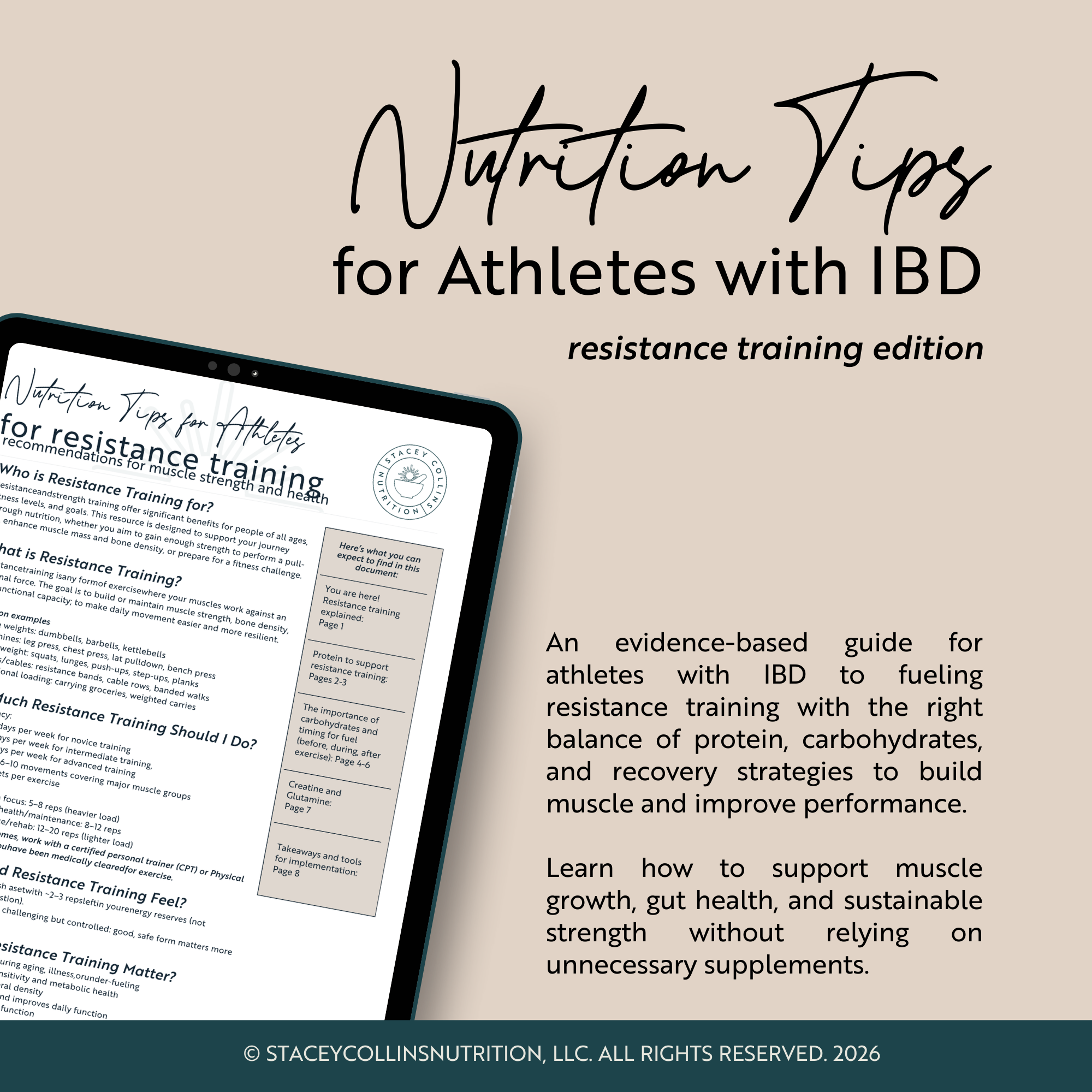
Purchase Resistance Training Nutrition for Athletes with IBD: Protein, Carbs & Recovery for Muscle Strength ($15)
Learn about what resistance training actually does in the body, how to consume protein as an athlete with IBD, how to use carbs for strength and performance, and supplement and recovery strategies.
Endurance Training Guidelines for Athletes with IBD
Endurance training often puts greater demands on your gut, energy reserves, and mental bandwidth. Thoughtful programming and fueling make a difference you’ll feel.
Programming
Many endurance athletes train:
3–5 sessions per week
Across a range of intensities
With IBD, how those sessions are structured matters as much as how many you do.
Common challenges include:
GI distress with high-impact workouts
Mapping bathroom access before every run or ride
Anxiety during group rides, runs, or races due to lack of control
Helpful strategies often include:
Keeping most sessions at moderate intensity
Limiting the number of very hard or very long days
Choosing lower-impact options when symptoms are sensitive
You don’t need to eliminate endurance training, but you may need to be selective.
Fueling for Endurance Training
Endurance training increases your need for both carbohydrates and fluids. For athletes with IBD, this is often the hardest piece to get right.
Common fueling challenges:
Sugar alcohol intolerance in many commercial gels
Fear of mid-run diarrhea
Increased dehydration risk with an ileostomy or high-output days
What often helps:
Testing fueling strategies in low-pressure settings
Choosing low-FODMAP or simplified carb sources
Using individualized hydration and electrolyte plans
Your best fueling strategy is the one you tolerate, not the one that matches everyone else.
Red Flags to Monitor
Endurance training with IBD requires ongoing self-monitoring.
Red flags may include:
A sudden or unexplained drop in performance
New or worsening pain
Fatigue that doesn’t improve with rest
These signs can reflect:
Overreaching or under-recovery
Active inflammation or a brewing flare
It’s not always easy to tell the difference, especially when others don’t understand what you’re managing. When something feels off, pulling back or reassessing protects your long-term ability to train.
Key Takeaways: Endurance Training
- Endurance training can be beneficial, but it places higher demands on your gut, fueling, and recovery.
- Most athletes with IBD tolerate endurance work best when the majority of sessions stay moderate in intensity.
- Fueling and hydration strategies must be individualized. “Optimal” means tolerable, not trendy.
- GI symptoms, fatigue, or sudden performance drops are signals to reassess, not push harder.
- Scaling endurance training during symptom flares protects your ability to train long-term.
Balancing Resistance and Endurance Training
If you live with IBD, balancing resistance and endurance training isn’t a matter of finding the perfect split. Instead, it’s about matching training stress to your current capacity, and letting that balance change over time.
Both types of training support your health and performance. The challenge is deciding how much of each makes sense right now.
For many athletes with IBD, resistance training works best as the steady base. Endurance training layers on when symptoms, energy, and recovery allow. That balance may shift week to week—or even day to day—and that flexibility is a strength, not a weakness.
How Balance Can Shift Over Time
You may lean more heavily on resistance training when:
Symptoms feel unpredictable
Energy is low or recovery feels slow
You’re returning after a flare, illness, or time off
You may lean more heavily on endurance training when:
Symptoms are stable
Fueling feels manageable
You’re preparing for an event that requires it
Neither phase is more “committed” than the other, because these training modalities serve different purposes.
Example Weekly Training Templates
These examples aren’t prescriptions, but starting points you can adapt to your body and lifestyle. Always check with your medical team to get cleared before implementing a new routine for physical activity.
When Symptoms Are Stable & Recovery Is Good
- 2–3 resistance training sessions
- 2–3 endurance sessions (mostly moderate intensity)
- 1 full rest or active recovery day
When Symptoms Are Fluctuating or Energy Is Limited
- 2 resistance training sessions
- 1–2 shorter, lower-intensity endurance sessions
- 2 rest or active recovery days
During Early Return After a Flare or Illness
- 1–2 light resistance sessions
- Optional short, low-impact endurance sessions
- Emphasis on recovery and symptom monitoring
Common Challenges and How to Work with Them
Unpredictable Symptom Days
Some days, your planned session won’t match how your body feels. On those days, scaling intensity, shortening the session, or switching modalities keeps you moving without forcing it.
Fatigue that Doesn’t Match Your Fitness
Inflammation and recovery demands can create fatigue that feels disproportionate to your training. This is just how physiology works. It doesn’t mean you’re losing all your conditioning.
High Motivation with Limited Capacity
Wanting to train more doesn’t always mean your body can tolerate it. Learning to pause, adjust, and come back later protects long-term progress.
Balancing both modalities isn’t about doing as much as you can; rather, it’s about doing what your body can adapt to right now, and trusting that capacity will change again.
Key Takeaways: Balancing Both Modalities
- Resistance training often provides a stable foundation when symptoms or recovery are unpredictable.
- Endurance training works best when layered in strategically, not forced year-round.
- Your ideal balance will change over time—and that’s expected with IBD.
- Adjusting training is a skill, not a setback.
Monitoring Training Load and Recovery in IBD
Training with IBD means you pay attention to more than just pace, weight, or mileage. Your body gives you multiple streams of feedback, and learning to track patterns rather than obsess over single data points can help you train more sustainably.
Monitoring doesn’t mean micromanaging yourself. It means noticing trends so you can adjust before small issues become bigger setbacks.
What to Track (and Why)
You don’t need to track everything. Focus on a few signals that actually inform decisions.
Training metrics
Session type, duration, and intensity
How hard the workout felt (RPE)
Recovery time between sessions
These help you see whether training stress matches your current capacity.
Symptom patterns
GI symptoms during and after training
Fatigue levels across the day
Sleep quality
Symptoms often change before performance does. Noticing those shifts early gives you more room to adjust.
Fueling and hydration
What you ate or drank before and after training
Tolerance during longer or harder sessions
Hydration strategies that worked (or didn’t)
This helps separate fueling issues from training or disease activity
Medical context
Recent labs or imaging, if available
Medication changes or steroid use
Flare history or recovery timelines
Labs provide context, but they don’t tell the whole story.
When the Data Feels Confusing
One of the most frustrating parts of training with IBD is when the numbers look “normal,” but your body doesn’t feel normal.
You might see:
Stable labs alongside crashing performance
Adequate sleep but persistent fatigue
Reduced training load without improved recovery
This disconnect is real. Inflammation, immune activity, and medication effects don’t always show up clearly in standard labs, especially in early stages.
Your experience still counts as data.
Using Metrics Without Burning Out
Monitoring should support you, not add stress.
Helpful approaches include:
Looking at weekly or monthly trends, not daily fluctuations
Using notes instead of numbers when energy is low
Dropping nonessential tracking during flares
If tracking starts to feel like a full-time job, it’s okay to simplify. You can always add detail back later.
When to Reassess or Ask for Support
Certain patterns signal the need to pause and reassess.
Pay attention if you notice:
Consistent decline in performance despite adequate recovery
Symptoms worsening with training rather than improving
Fatigue that lingers longer than expected
These signs don’t mean you’re failing. They just mean something needs to adjust, whether it’s your training load, fueling, medical care, or all three.
Key Takeaways: Monitoring with IBD
- Patterns matter more than single data points.
- Symptoms are valid data, even when labs look normal.
- Monitoring should guide adjustments, not create stress.
- Simplifying your tracking during flares protects mental energy.
Practical Tools to Support Working Out with IBD
When you live with IBD, success in training often comes down to preparation versus perfection. Having a few simple tools in place can make working out less stressful while protecting your energy and helping you respond calmly when things don’t go according to plan.
These tools aren’t meant to control every variable, but they can give you options.
A. Pre-Training Check-In
Before you train, take 30 seconds to assess where you are today, not where you hoped to be.
Ask yourself:
How is my energy right now?
Are my GI symptoms quiet, manageable, or active?
Did I sleep and hydrate enough to support this session?
Am I training to build, maintain, or just move today?
If more than one answer feels off, consider scaling intensity or duration before you start. Adjusting early can prevent symptoms from escalating later.
B. Fueling Strategies You Can Actually Use
Fueling with IBD works best when it’s familiar, tolerated, and flexible.
Helpful principles:
Stick with known, tolerated foods before key sessions
Keep portions smaller if fullness or bloating is an issue
Use liquid or semi-solid options when appetite is low
Practice race-day fueling during low-stakes training, not on race day
If a fueling strategy irritates your gut—even if it’s evidence-based or popular—it’s not the right one for you.
C. Race-Day and Long-Session Planning
Long sessions and events often bring the most anxiety. Planning ahead can reduce the mental load.
Consider:
Mapping bathroom access along routes
Carrying backup fueling options
Building extra time into warm-ups or travel
Choosing clothing and gear that feels secure and comfortable
If you live with a stoma, additional planning may include:
Extra supplies (bags, wipes, barrier products)
Adjusted hydration and electrolyte intake
Clothing that minimizes friction or pressure
Preparation doesn’t mean expecting something to go wrong, but it does mean you can confidently handle it if it does.
D. When a Session Needs to Change, or to Stop Altogether
Some days, symptoms change mid-workout. Having a plan before that happens makes it easier to respond without panic or shame.
Give yourself permission to:
Shorten the session
Switch modalities (for example, from running to cycling)
Lower intensity
Stop entirely
Stopping a session because your body asks you to isn’t quitting. Reframe your mindset and view it simply as data that helps you make more protective decisions.
E. Post-Training Reset
After training, a brief reset helps you recover and learn.
Try to note:
How your gut responded during and after the session
Whether fueling felt supportive or stressful
How fatigue shows up later that day or the next
You don’t need to log everything; just a few consistent observations can go a long way.
Key Takeaways: Practical Tools
- Simple check-ins help you match training to your current capacity.
- Familiar, tolerated fueling beats “ideal” fueling every time.
- Planning reduces anxiety and preserves mental energy.
- Adjusting or stopping a session is a skill, not a failure.
- Tools exist to support you—not control you.
Training with IBD Is About Adaptation, Not Limitation
Resistance and endurance training can both play meaningful roles in your life as an athlete with IBD. Each supports different aspects of health and performance, and each places different demands on your body, gut, and recovery systems.
What matters most isn’t choosing one over the other, but learning how to adapt both to your current capacity.
Progress with IBD is rarely linear. Flares, medication changes, surgeries, and life stress can interrupt even the most thoughtful plans. That doesn’t erase the work you’ve done, and it doesn’t mean you’re starting from nothing each time.
Athletes with IBD often carry a heavier emotional load alongside their physical training. You plan more. You monitor more. You adjust more. That effort is very real and can be taxing.
With individualized programming, strategic fueling, and compassionate pacing, performance remains possible. It may look different across seasons of health, but strength, endurance, and confidence can all be rebuilt.
Training with IBD isn’t about pushing through at all costs. It’s about paying attention, responding early, and giving your body what it needs to keep going—again and again and again.